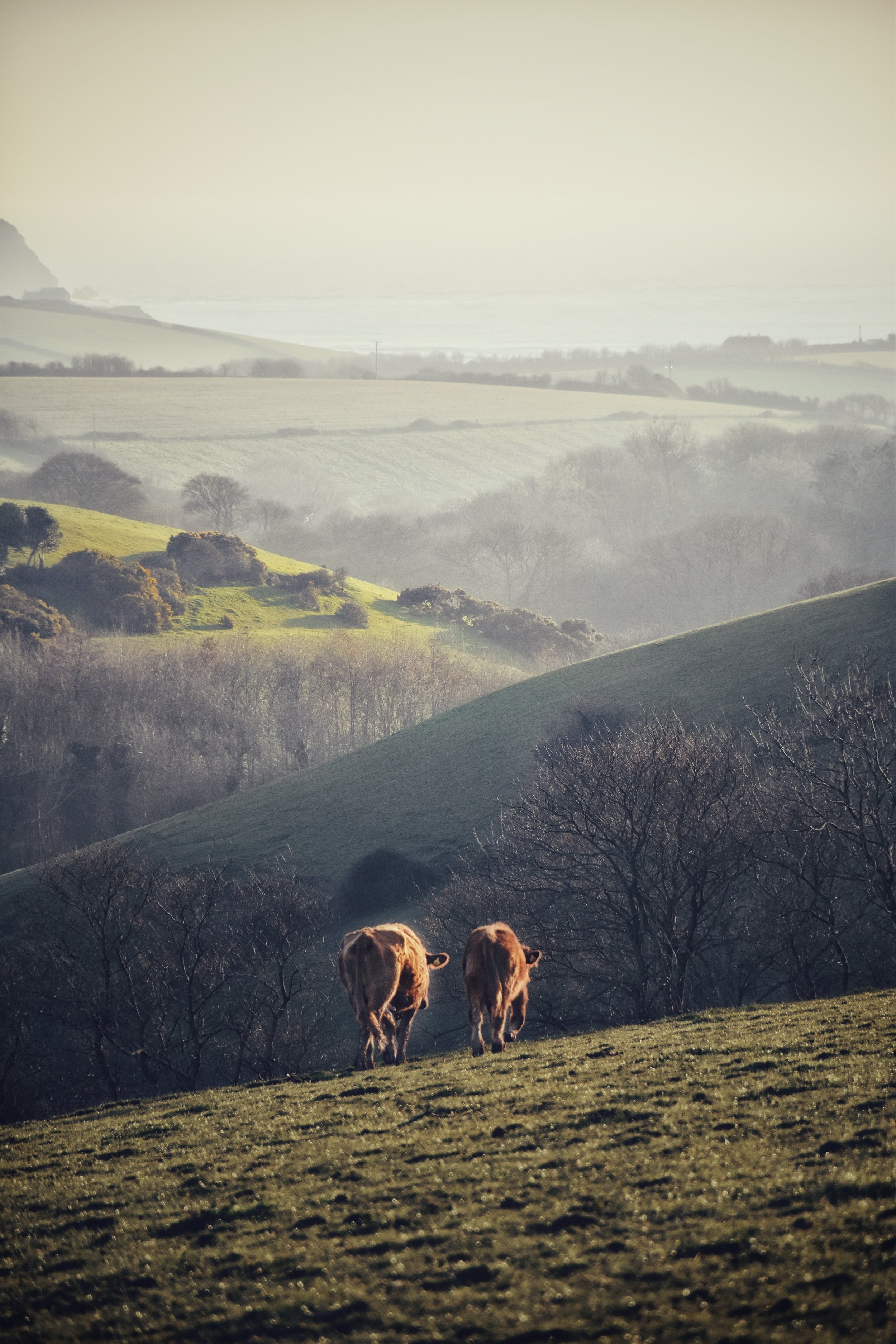
Land & Faith
Exploring the Christian tradition’s wisdom for the land and our relational place within it.
At Our Cornish Farm we're relearning how to care for the land as a practical act of faith.
Prayer, study, dialogue, festivals, hospitality and, of course, the blessed struggle of work.
A rediscovery of the seasonal rhythm of rural life and the devotional rhythm of Christian stewardship and community.
-
Topics like sustainable enterprise and environmentalism have gained significant momentum in recent decades. But, the response has misdiagnosed both the sickness and the remedy by materially undervaluing (almost to the point of exclusion):
The answers found in religious and spiritual worldviews
The historic contribution of religious people(s) and community(s)
The value of rootedness and a deep sense of place
The vitality of heritage and tradition
The voice of those who actually live and work in the land
-
A Christian worldview of land stewardship sits within a grand story. Something cosmic, majestic and mysterious that gives us a stake in something far bigger than ourselves.
But it is not merely abstract, esoteric and ethereal. Christianity’s positioning within the dirt and grace of human history, via its origin stories and millennia of application makes it concrete, practical and accompanied by a wealth of learned wisdom.
To paraphrase CS Lewis, it is a faith with a postcode.
At Our Cornish Farm we seeks to explore, demonstrate and share in it.
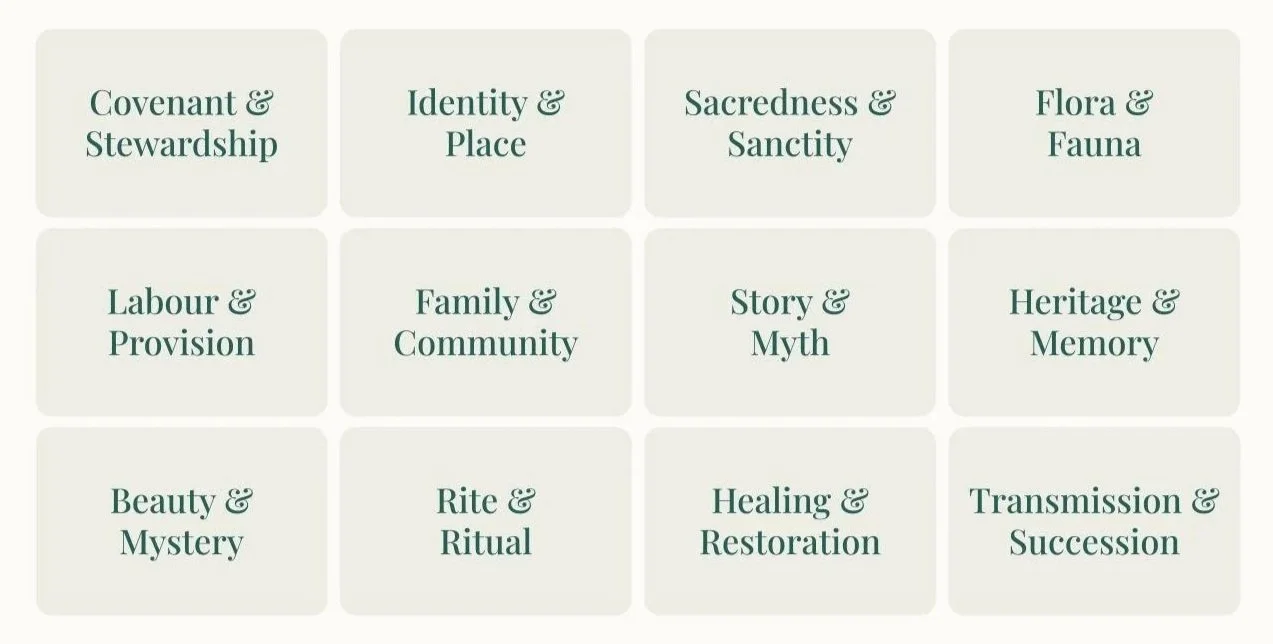
12 Areas of Thinking
and Practice
Our English Rural Year
Living out the seasonal, historic, folkloric and church calendar.
Restoring the health of the land requires placing people, cultural heritage and rural community at the heart of the approach.
We structure that approach around the communal fellowship of the English Rural Year, as guided by various traditional calendars.
We hope our home ever increasingly becomes a gathering place for feasts, festivals and everyday customs, open to our local community and others from further afield who wish to be part of it.
-
We have divided our approach to this into four layers or spaces that flow out from the centre: the home.
The Hearth
The way we live within our own private family space.
The Everyday
The daily tasks of overseeing a Cornish farm with all its constituent landscapes, wildlife, ecosystems and buildings.
The Local
Informal socials and community occasions that reflect local rhythms (eg Cornish saints’ days)
The National
Organised events that reflect regional and national event traditions (eg harvest festival).
-
Contemporary environmentalism looks at the land directly: tree planting, carbon data, ecosystem mapping, rewilding, state subsidy.
This all has its place: we do plenty of it as well. But this approach is distinctly modern. At its worst it splits life into disconnected, dehumanised and secularised parts, then tries to fix each component in isolation with a money, technology, science and policy first approach.
This method ultimately reinforces a distance from nature that keeps it as a commodity to be used or a curiosity to be admired, however much we might adore it. What we need is something much more relational and romantic. A relationship to nature born not merely of our need or fascination but duty, kinship, shared memory, priestliness even.
This is why Our English Year matters. Living in the countryside makes one very aware of the seasons but nesting life within a cultural rhythm requires us to turn up attentively and consistently, month after month. To notice what the land is doing and weave that attention into affection.
Application then matters because, whilst talking or writing about a better way forward is crucial, ideas eventually reach the limits of theory. As a family, we are fortunate to have a space where we can both think and practice, so we’re opening up our home to whomever is interested in either or both.